
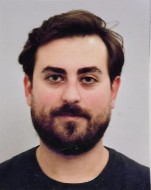
Stefano Dimarco
Medico specialista in Dermatologia e Venereologia, svolgo attività di ricerca e clinica presso la Clinica Dermatologica dell’Università degli Studi di Catania in qualità di dottorando del 41° ciclo del Dottorato di Ricerca in Innovazione Tecnologica in Ambito Biomedico con il progetto “Emerging non-invasive imaging techniques for the treatment monitoring of non-melanoma skin cancer: advantages and perspectives”.
Il mio percorso formativo si è sviluppato tra Roma e Catania: mi sono laureato con lode in Medicina e Chirurgia presso l’Università Campus Bio-Medico di Roma, ho conseguito un Master universitario di II livello in Psico-Oncologia presso l’Università Cattolica del Sacro Cuore e mi sono specializzato con il massimo dei voti in Dermatologia e Venereologia presso l’Università degli Studi di Catania.
La mia attività si sviluppa integrando pratica clinica e ricerca, con particolare attenzione alle tecnologie diagnostiche non invasive e alla loro applicazione nella dermatologia.
Dal punto di vista clinico, il mio interesse è rivolto alla dermatologia dell’adulto e del bambino, con particolare attenzione alle patologie oncologiche, infiammatorie ed infettive di cute ed annessi e alle malattie sessualmente trasmesse.
Ho partecipato, anche in qualità di relatore, a congressi nazionali e sono coautore di pubblicazioni scientifiche su riviste specializzate, con particolare focus sulla diagnostica non invasiva nelle infezioni cutanee e nelle cheratosi attiniche, nonché sulle strategie terapeutiche in ambito dermato-oncologico.
Ambito di ricerca: Emerging non-invasive imaging techniques for the treatment monitoring of non-melanoma skin cancer: advantages and perspectives
Parole chiave: Dermatologia; NMSC; Diagnostica non invasiva; Line-field Confocal Optical Coherene Tomography; RCM;
Abstract:
Recent innovation in non-invasive imaging technologies have significantly changed the diagnostic and monitoring approach to non-melanoma skin cancer (NMSC). Among these, Line-Field Confocal Optical Coherence Tomography (LC-OCT), reflectance confocal microscopy (RCM), and dermoscopy enable real-time, high-resolution visualization of skin structures, providing a “virtual biopsy” with strong correlation to histopathology. Despite their increasing adoption in clinical practice, their role in treatment monitoring and in the detection of subclinical residual disease remains only partially defined.
This PhD project aims to prospectively evaluate the usefulness of non-invasive imaging techniques in the assessment of therapeutic response in NMSC, with particular focus on actinic keratosis, basal cell carcinoma, and squamous cell carcinoma in situ. Patients will undergo a standardized evaluation protocol including clinical examination, dermoscopy, RCM, and LC-OCT at different stages of treatment and follow-up. In selected cases, histopathological analysis will be performed to enable a direct comparison between in vivo imaging findings and ex vivo tissue characteristics.
The primary objective is to assess treatment efficacy by comparing clinical and imaging-based evaluations, with particular attention to discrepancies such as apparent clinical resolution in the presence of residual subclinical disease. Secondary objectives include the in vivo characterization of treatment-induced microscopic changes and the identification of potential predictive factors associated with treatment response or persistence.
In parallel, the project will explore the integration of artificial intelligence (AI) tools for the analysis of non-invasive imaging data, with the aim of improving diagnostic accuracy and reproducibility. The combined use of advanced imaging technologies and AI may support clinicians in the interpretation of complex findings and in the management of clinically challenging cases.
Overall, this research aims to validate non-invasive imaging as a reliable tool for treatment monitoring in NMSC and to contribute to a more precise, personalized, and less invasive approach to patient management.
- Lacarrubba F, Verzì AE, Dimarco S, Micali G. Advanced nicotinamide-containing broad-spectrum sunscreen could prevent actinic keratosis relapse after lesion-directed or field-directed treatment: results of a nine-month follow-up-controlled study. Ital J Dermatol Venerol. 2026 Apr 8. doi: 10.23736/S2784-8671.26.08536-1. Epub ahead of print. PMID: 41950053.
- Lacarrubba F, Verzì AE, Dimarco S, Luppino I, dall'Oglio F, Micali G. La tirbanibulina nel trattamento delle cheratosi attiniche: descrizione di un caso con valutazione strumentale e follow-up a lungo termine [Tirbanibulin in the treatment of actinic keratoses: description of a case with instrumental evaluation and long-term follow-up.]. Recenti Prog Med. 2024 Oct;115(10):37e-41e. Italian. doi: 10.1701/4357.43475. PMID: 39446004.
- Verzì AE, Lacarrubba F, Dimarco S, Micali G. A novel technique for noninvasive diagnosis of herpesvirus-related skin conditions. Clin Exp Dermatol. 2025 Jun 25;50(7):1403-1405. doi: 10.1093/ced/llaf061. PMID: 39907019.